



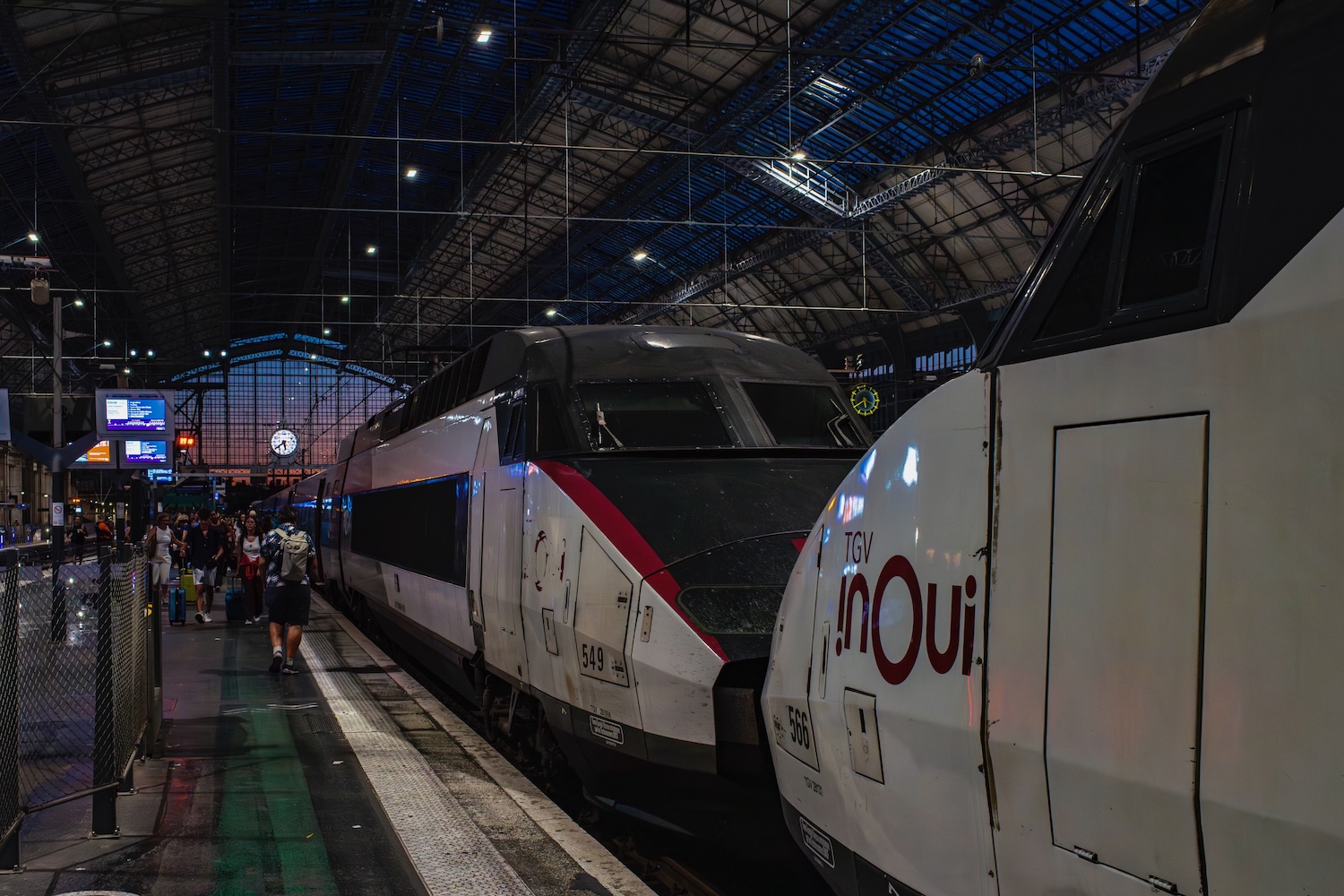
The first time I ever went to France, I felt amazed—and not just by the TGV (train à grande vitesse, literally “high-speed train”), although that was in a category all its own.
Rather, as an American from the middle of the country, I simply found it astonishing that I could go basically anywhere I wanted without getting in a single car (or, for the most part, even riding a bus). Such a thing would’ve been impossible in most parts of the US, and certainly impractical even where it was possible.
The bad news? Over the years, I’ve become more cynical about taking the train in France—you can blame that on Japan, I suppose. The good news? I’m here to break it all down for you regardless.
Why I’ve Soured on French Trains
Picture it: June 2026, and I’m sitting in a parking lot in Carnac, France, checking my emails after a long road trip through the Brittany region of France. I notice a message from SNCF, the French rail company—my train back to Paris (where I’ll be catching one onward to Bordeaux) has been delayed. Or has it? That word—supprimé—sticks with me. And then I realize: My train has actually been canceled.
Resolving this proved much more difficult than it should’ve, since I was traveling with a French rail pass; in simplest terms, I ended up needing to buy a cash ticket outright, since a direct exchange wasn’t possible, and there was just one seat left. Worse, although only one other train (of the ~10 high-speed TGV legs I traveled) was actually canceled, virtually all of them were delayed significantly. And the French government thinks it can one day ban all domestic flights!
5 Things to Know About Taking the Train in France
The TGV network is extensive—but not comprehensive
You can ride TGV trains to most major destinations in France, including Bordeaux, Lyon and Avignon. However, some destinations are notably excluded from the TGV network, such as Chamonix in the French Alps and the entire region of Normandy. Additionally, in some cases, TGV trains operate at normal speeds, such as along the route from Marseille to Nice.
Trains in France aren’t necessarily reliable
As I mentioned a few sections up, my latest experience with the France TGV was less than impressive, with one train cancelled outright, another cancelled after it stalled for over an hour and half a dozen others delayed significantly. Now, I can’t say whether this is new, or whether I simply notice it more now because of how much time I spend in Japan. Regardless, I know from personal and widespread experience that the TGV simply isn’t that reliable.
First class is worth the upgrade—under one condition
Whether you travel with a rail pass or buy tickets outright, I highly recommend springing for first class, which is more more peaceful than ordinary carriages. However, I also say this with a major caveat: You need to make sure you choose one of the “solo, forward-facing” seats, ideally via the TGV Inoui Pro app. If you don’t, you could get stuck in a section of four seats, or even more awkwardly, facing directly at a total stranger for the entirety of your journey. Not very “first-class”!
Paris has several railway stations
In a perfect world, all high-speed trains in France would set off from the same station. Unfortunately, this is simply not the way things work. Paris instead has four railway stations relevant to TGV travelers: Gare Montparnasse (which is where you take trains going to the west and southwest); Gare de Lyon (which serves not only routes to Lyon, but also to Marseille and Nice); Gare du Nord (where you go for trains headed north, as well as to the Benelux countries and the UK); and Gare de l’Est (which serves TGV routes bound for Strasbourg and most of Germany).
Rail passes are a great value, but they have limitations
I almost always use a rail pass when I go to France—or at least I have, historically. Unfortunately, due to difficulties I faced in rescheduling trains following the two cancellations during my last trip, I may reconsider in the future. This is because modifying a journey when you have a general rail pass requires either visiting a ticket office in person, or buying a new ticket outright. And if this occurs more than once or twice, it calls both the value and the utility of the pass into question.
What About Metro Systems and Other Urban Rail?
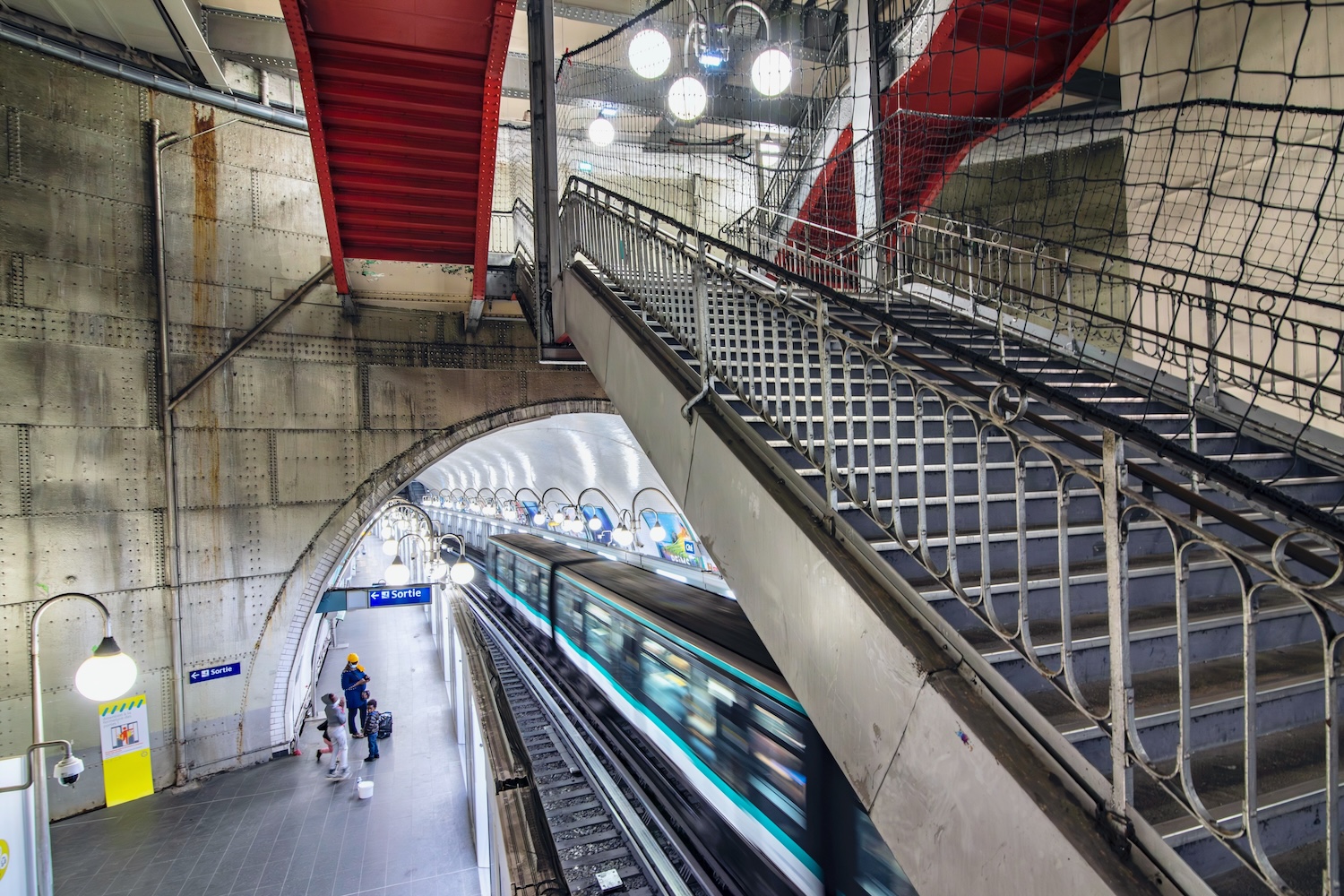
For many visitors to France, the Paris Metro is every bit as important as long-distance trains around the country. The Paris Metro and other urban rail lines, such as the RER Lines that connect the capital to destinations on its periphery—Line B to Charles de Gaulle Airport; and Line C to the palaces of Versailles are probably the most important as far as most foreign tourists are concerned.
Other examples of short-distance trains in France include the Lyon and Marseille metro networks, as well as the trams you find in cities such as Bordeaux and Nice. Ironically, I find that a lot of these less flashy local train systems tend to be more reliable than the so-called Grand Lines; they also aren’t covered by any rail pass that you happen to have. In most cases, however, you can pay for them by tapping your credit card, so they are quite convenient nonetheless.
Other FAQ About Taking the Train in France
Is it expensive to travel by train in France?
Trains in France are not prohibitively expensive, and can be legitimately affordable if you book in advance, or if you use a rail pass for long-distance travel on the high-speed TGV network. However, paying cash for all your trains or booking last-minute tickets can often result in a much higher overall expenditure for French train travel.
Why is TGV so expensive?
The TGV is very expensive primarily because it is considered a premium service, unlike local and suburban train lines in France, which are heavily subsidized by governments. Additionally, the cost of operating high-speed TGV trains is simply very high, and passengers end up footing the bill for it.
What is a good itinerary for traveling by train in France?
All French train lines begin and end in Paris, and your French rail itinerary needs to account for that. For a trip that takes you from Paris to Brittany, Bordeaux, Lyon, Marseille and Nice, you’d need to ride Paris (Montparnasse)-Rennes-Paris (Montparnasse)-Bordeaux-Massy-Lyon-Marseille-Nice.
The Bottom Line
Whether or not you end up regarding the experience as exceptional, taking the train in France is very easy and incredibly useful. For some travelers, this will merely entail suburban rail lines from Paris to Charles de Gaulle Airport or Versailles. Others will explore more extensively, be that riding TGV (in other words, high-speed trains) to Brittany in the west, Bordeaux in the southwest or the Côte d’Azur in France’s deep south, while others will use local trains to explore regions like Provence and the French Alps. Need personalized help figuring our transportation in advance of your next trip to France? Consider commissioning a custom France itinerary!